

Flying with a Baby
The Complete Guide to Airline Bassinets
Understand who can use an airline bassinet, how to request one and what to expect onboard.
Start with the essentials, then check your airline before you book.
Start here
Airline bassinet essentials at a glance
Airline bassinets can make a long flight with a baby much more manageable. Availability and rules differ, but these are the details worth knowing before you book.
- Long-haul flightsUsually offered on selected medium and long-haul aircraft.
- Baby limitsCommon weight limits range from 9 to 12.5 kg, depending on the airline.
- Bulkhead positionBassinets attach at selected bulkhead seats.
- Request earlyThey are limited and must usually be requested before travel.
- Often includedMost airlines offer an eligible bassinet without an extra fee.
- Always reconfirmAircraft changes can affect availability right up to departure.
What is an airline bassinet?
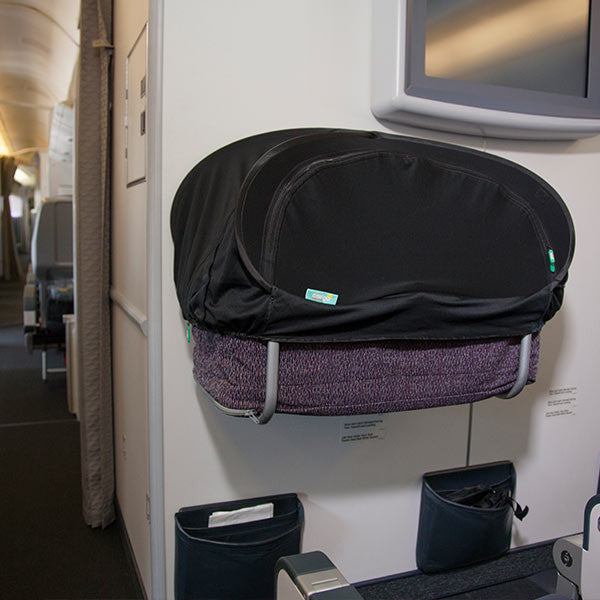
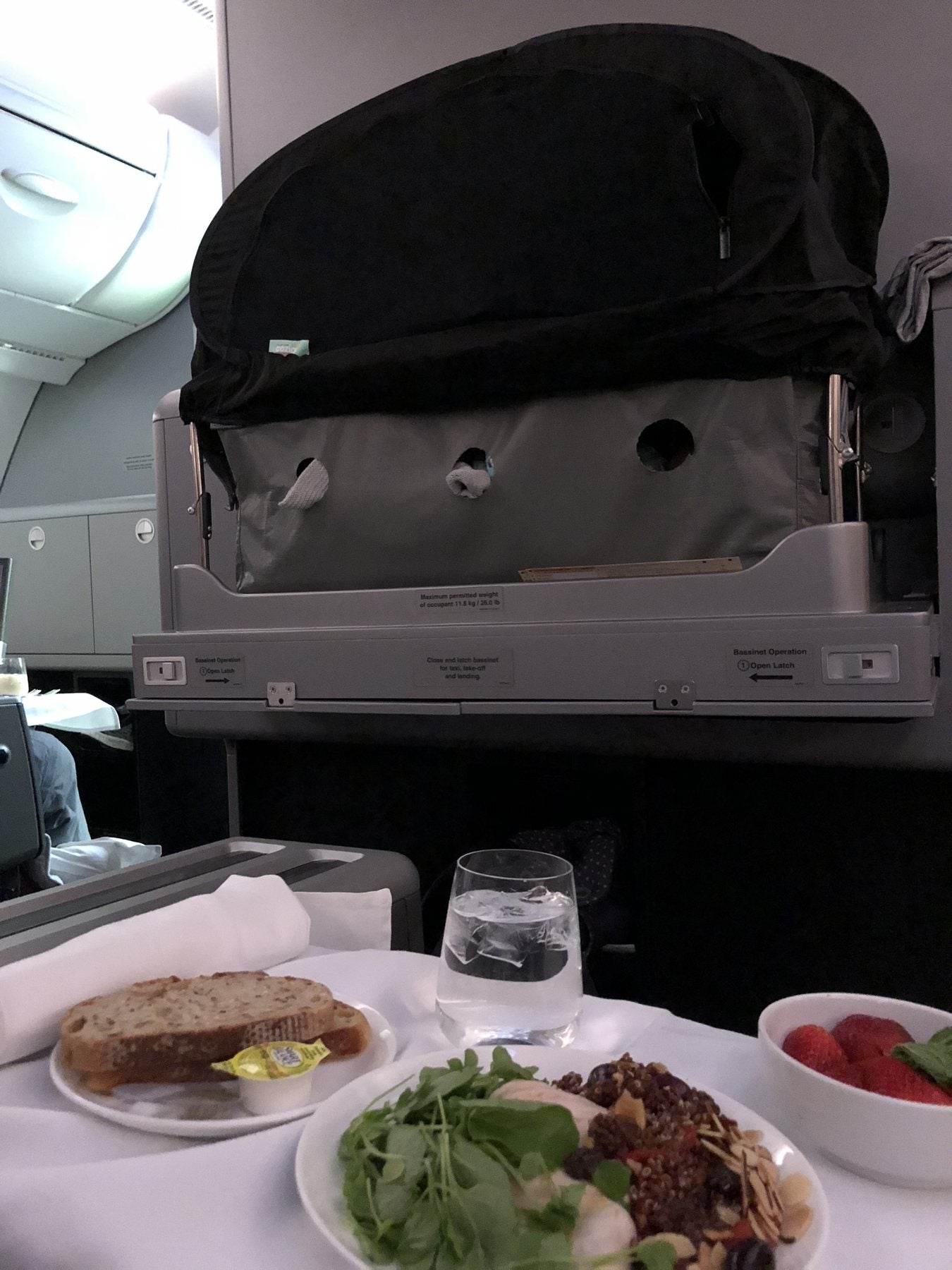
An airline bassinet is a small cot that attaches to the bulkhead wall on selected aircraft. It gives an eligible baby a dedicated place to rest and gives parents some welcome hands-free time.
You may also see it described as a carry cot, baby cot or baby bed. Designs vary by airline and aircraft, including the shape, restraint and sleeping position.
They are typically available on medium and long-haul flights at selected bulkhead seats, which may also provide extra legroom.
Why parents love airline bassinets
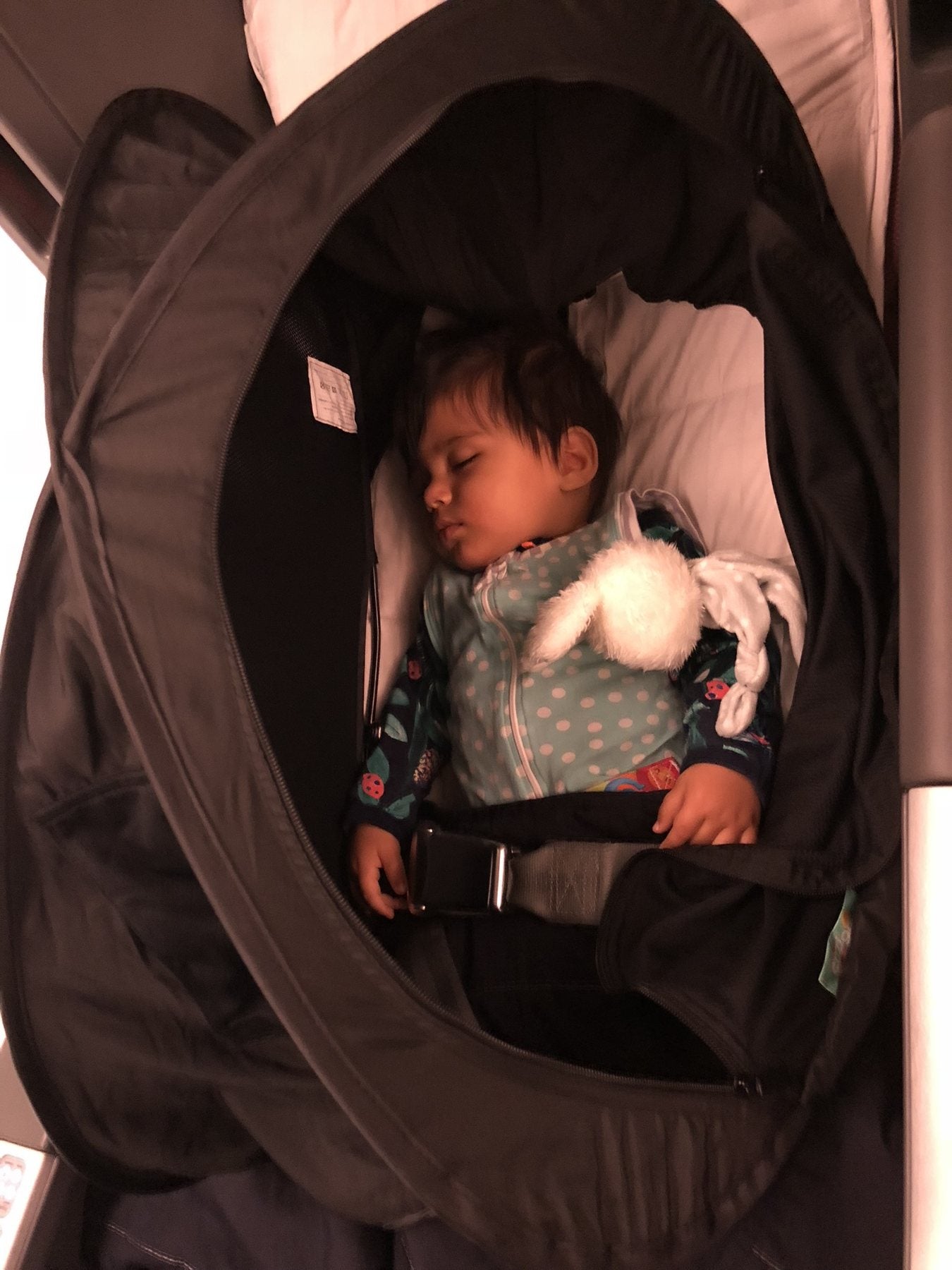
- A dedicated sleep spaceMany babies settle better when they have somewhere to lie flat rather than sleeping on a parent's lap.
- A more comfortable journeyA place for your baby to rest can make a long flight easier for everyone.
- A chance to use both handsEat, stretch or simply rest your arms while your baby sleeps nearby.
- Potential extra legroomBassinet positions are usually at bulkhead rows, which can provide more space.
Is an airline bassinet right for your baby?
There is no single age or size rule for every flight. Check the airline, route and aircraft before you book.
- AgeSome airlines use an age guide, while others focus on weight and length.
- WeightMany airline limits fall between 9 and 12.5 kg.
- Size and mobilityA baby who can sit independently or no longer fits safely may not be eligible.
- AircraftThe available bassinet can change even when you fly with the same airline.
If your baby is near a published limit, confirm directly with the airline before choosing your flight.
A few things to keep in mind
While airline bassinets are a fantastic option, they're not designed to replace your baby's normal sleep space for the entire flight.
During take-off, landing and, on most airlines, periods of turbulence, you'll be asked to take your baby out of the bassinet and hold them safely on your lap. Some airlines, including Qantas and Virgin Australia, use bassinets with integrated restraints that may allow babies to remain in place during turbulence, depending on crew instructions.
Because policies vary, always follow the instructions of the cabin crew throughout your flight.
How do I book an airline bassinet?
The most important thing to know is that airline bassinets usually can't be booked like a standard seat.
Instead, you'll generally need to request one after you've booked your flight. Because each aircraft only has a limited number of bassinets, they're often allocated on a first come, first served basis, although some airlines may prioritise younger babies.
Every airline has its own process. Some allow you to request a bassinet online when managing your booking, while others ask you to contact their customer service team directly.
If having a bassinet is important for your journey, it's worth requesting one as early as possible.
It’s also important to note that airline bassinets are usually installed at bulkhead seats. However, not every bulkhead seat has bassinet fittings, so always check with your airline before selecting your seats.
Our recommended booking timeline
- Book the right flightChoose a service that offers bassinets and check the airline's baby limits before booking.
- Request the bassinetSubmit the request as soon as your booking is confirmed. Do not assume it is automatic.
- Reconfirm before you flyContact the airline a few days before departure to check the request is still attached.
- Arrive earlyIf allocation happens at the airport, early check-in can improve your chances.
Good to know
A bassinet request isn't always a guarantee.
Aircraft changes, operational requirements and demand can all affect availability, so it's always worth having a backup plan if your baby ends up travelling on your lap.
Even with the same airline, bassinet availability and design can differ depending on the aircraft operating your flight. That's why two flights with the same airline may have slightly different policies.
Quick answers
Common airline bassinet questions
Clear answers to the practical questions parents ask most before flying.
Can I reserve a bassinet when I book my ticket?
It depends on the airline. Some allow you to request one during the booking process, while others require you to contact them afterwards. In most cases, a bassinet remains a request rather than a confirmed reservation.
Are airline bassinets free?
On many airlines, yes. They're generally provided at no additional cost for eligible infants travelling on an adult's lap. Availability, however, is limited and varies between airlines.
What if I don't get a bassinet?
If a bassinet isn't available, your baby will travel on your lap for the flight. Bringing familiar sleep cues, such as their usual blanket, bedtime routine or white noise, can help make the journey more comfortable.
Can twins both have airline bassinets?
It depends on the airline, the aircraft and how many bassinets are available.
Some airlines can accommodate two bassinets if you're travelling with twins, while others may have limited bassinet positions on board. If you're travelling with more than one infant, it's best to contact your airline as early as possible to discuss your options and request bassinets when you book.
What if my baby can already sit up?
Every airline has its own age, weight and size limits for bassinets. Even if your baby is within the weight limit, they may no longer be eligible if they're too long or able to sit up or pull themselves upright safely.
If your little one is close to the limit, check with your airline before you travel so you know what to expect.
Can I use my own blanket in an airline bassinet?
In most cases, yes. Bringing your baby's usual blanket, comforter or sleep sack can help make the bassinet feel more familiar and encourage them to settle.
As always, follow your airline's safety instructions and use bedding appropriately for your baby's age. If the cabin crew ask you to remove or adjust anything during the flight, simply follow their guidance.
What happens during meal service?
Meal service continues as normal while your baby is in the bassinet, although it can sometimes make the cabin a little busier and brighter.
The crew may need to move trolleys through the aisle, switch on additional lighting or speak with passengers nearby. This is one reason some parents like to recreate a calmer sleep environment with familiar bedtime cues, white noise or a sleep cover like CoziGo.
What if my flight changes aircraft?
Aircraft changes do happen from time to time, and they can affect bassinet availability or the type of bassinet provided.
If your flight changes before departure, it's worth checking that your bassinet request has been transferred to your new aircraft. If you notice a schedule or aircraft change in your booking, contact your airline to reconfirm your request as soon as possible.
What is it actually like using an airline bassinet?
For many parents, an airline bassinet is one of the biggest reasons to choose a particular flight. It gives your baby a dedicated place to rest and gives you the chance to eat a meal, stretch your arms or simply enjoy a few quiet moments.
That said, it's worth knowing that airline bassinets aren't tucked away in a quiet corner of the aircraft.
They're almost always located at the bulkhead, which is also one of the busiest areas of the cabin. Depending on your aircraft, this could mean you're close to the galley, toilets or where passengers queue during the flight.
While many babies sleep beautifully in an airline bassinet, others can find the extra movement, light and activity a little distracting. Knowing what to expect means you can come prepared and give your little one the best chance of settling.
What to expect onboard
- A busy locationBulkhead rows can be close to the galley or toilets, with more passing foot traffic.
- Bright cabin lightingNearby lights may stay on during meal preparation and passenger movement.
- Background noiseAnnouncements, conversations and meal service continue while your baby is trying to sleep.
- Every baby is differentSome babies sleep for hours. Others need extra comfort and familiar cues.
Help your baby feel at home
Babies respond to familiar cues when everything around them is changing. A feed, pyjamas, the same white noise and a familiar comfort item can all help signal that it is time to rest.
If you are travelling with CoziGo, use it on the pram before your trip so the darker sleep space already feels familiar when you board.
The goal is not to recreate the nursery perfectly. It is to reduce light and visual distractions, keep the routine recognisable and give your baby a calmer chance to settle.
Our favourite in-flight sleep tips
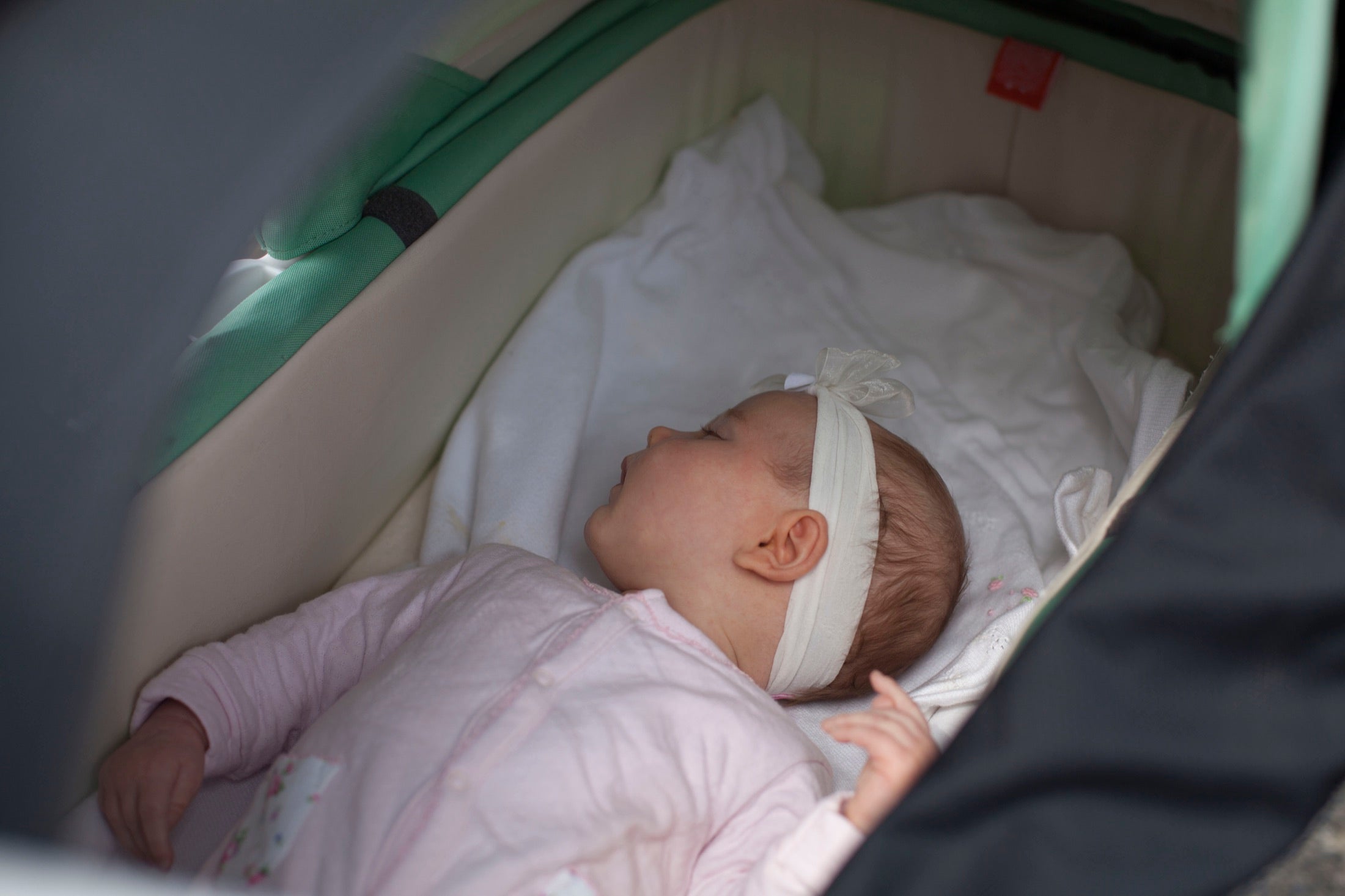
- Stick to your routineA fresh nappy, pyjamas, a feed or a bedtime song can signal that it is time to sleep.
- Bring familiar comfortsFamiliar smells and textures can be reassuring in a new environment.
- Use white noiseA downloaded track or portable machine can soften conversations and meal-service noise.
- Create a calmer sleep spaceReducing light and visual distractions can help babies switch off, particularly on daytime flights.
One cover, two sleep spaces
From airline bassinet to pram nap
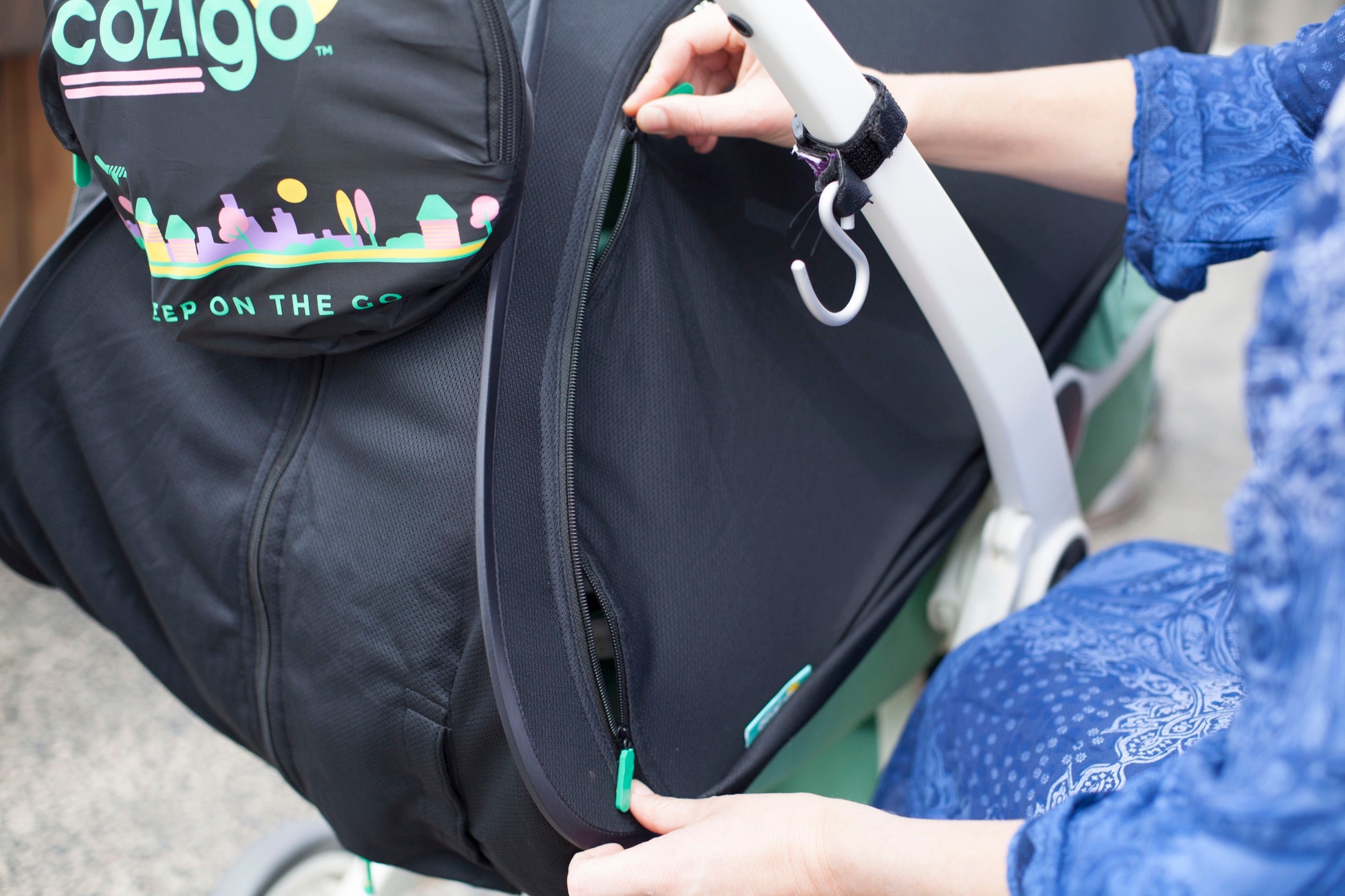
An airline bassinet gives your baby somewhere to rest. CoziGo helps make that space darker and less visually distracting while its breathable mesh maintains airflow.
After landing, the same cover moves to the pram for airport transfers, sightseeing, café stops and everyday naps away from home.
What travelling parents say
“A lifesaver on two 10-hour flights. My baby slept six hours straight on an overnight flight and took every nap on a daytime flight. It folded up easily and fit in an already bursting nappy bag.”
Jennifer J., verified customer
Our top tips for flying with a baby
Save this checklist for the night before you fly.
- Request earlyAsk for the bassinet as soon as your booking is confirmed.
- Double-checkReconfirm the request a few days before departure.
- Pack for both of youKeep spare clothes for your baby and yourself in carry-on.
- Download sleep soundsMake white noise or bedtime music available offline.
- Keep essentials closeOrganise feeds, changes and comfort items for easy access.
- Dress for sleepPack familiar sleepwear for an overnight flight.
- Leave extra timeArrive early enough to board without rushing.
Find your airline
Every airline sets its own bassinet limits and booking process. We have created an airline directory here to help you check official airline information when it comes to travelling with babies. There are lots of tips and information available.
Browse the airline directory
Always check directly with your airline before travel. Policies, aircraft and bassinet eligibility can change.
- Aer Lingus
- Aeroflot
- Aeroméxico
- Air Canada
- Air France
- Air India
- Air Mauritius
- Air New Zealand
- Air Seychelles
- Air Transat
- Alaska Airlines
- American Airlines
- ANA
- Asiana
- Avianca
- British Airways
- Cathay Pacific & Cathay Dragon
- China Airlines
- China Southern Airlines
- Condor
- Czech Airlines
- Delta
- easyJet
- El Al
- Emirates
- Etihad
- EVA Air
- Finnair
- Frontier Airlines
- Garuda Indonesia
- Gulf Air
- Hawaiian
- Iberia
- Icelandair
- ITA Airways
- JAL
- jetBlue
- KLM
- Korean Air
- LATAM Airlines
- Lufthansa
- Malaysia Airlines
- MIAT Mongolian Airlines
- Norwegian Air
- Porter Airlines
- Qantas
- Qatar Airways
- Ryanair
- Singapore Airlines
- South African Airways
- Southwest
- SriLankan Airlines
- Sunwing
- SWISS
- TAP Portugal
- Thai Airways
- TUI
- Turkish Airlines
- United Airlines
- Virgin Atlantic
- Virgin Australia
- WestJet
Continue planning your trip
Check which airlines have formally approved CoziGo for onboard use, then pack with confidence using the family travel checklist.
Wherever you're headed, we've got your naps covered.
Travelling with a baby takes a little more planning, but it doesn't mean putting adventures on hold.
From the airport to the aircraft, sightseeing to café stops, CoziGo helps create a familiar sleep space wherever your journey takes you.